Facebook
 X
X
 Pinterest
 Copy Link
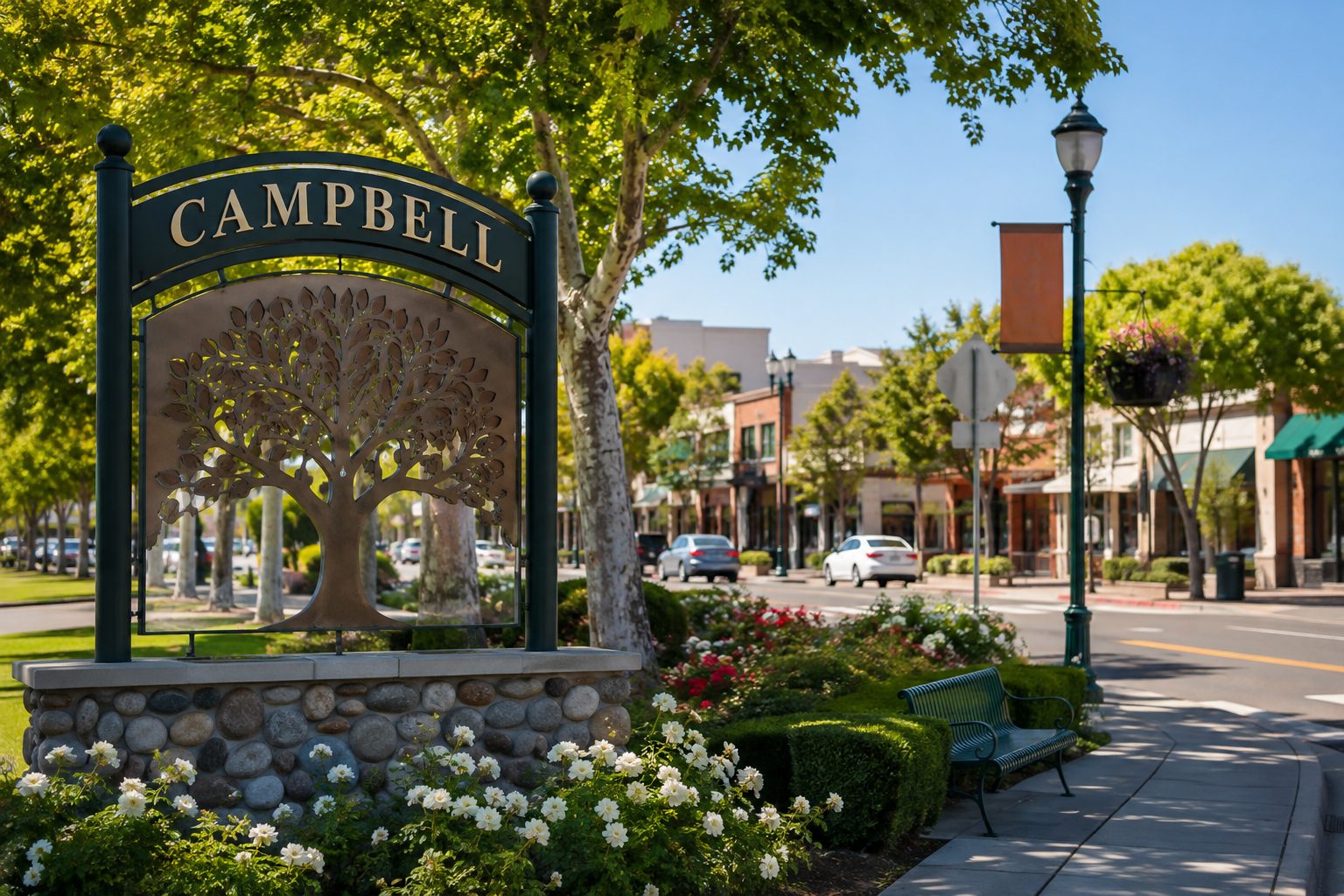
Buying a Home in Campbell, CA: A Local Buyer’s Guide
If Campbell is on your list of places to buy a home, there’s a lot to like—but there’s also more to understand than the price you see on a listing.
Campbell sits in a particularly convenient part of Silicon Valley, with access to San Jose, Los Gatos, Cupertino, Santa Clara and other major employment centers. It also offers something buyers don’t find everywhere in the South Bay: an established downtown, restaurants and shopping, access to the Los Gatos Creek Trail, and a mix of single-family homes, townhomes and condos.
But buying in Campbell isn’t one-size-fits-all.
A condo near Downtown Campbell offers a very different experience—and price point—than a single-family home farther west. Two homes with similar Campbell addresses can also differ in lot size, HOA costs, school attendance boundaries, commute routes and even how competitive they’ll be when they hit the market.
So if you’re thinking about buying a home in Campbell, California, here’s what I’d want you to know before you start writing offers.
What Does It Cost to Buy a Home in Campbell?
Campbell is part of the broader Silicon Valley housing market, and affordability remains one of the biggest considerations for buyers.
In 2026, citywide median home prices have generally been around the $1.6 million to $1.7 million range, although the number varies depending on the month, data source and types of properties included.
That’s an important distinction.
A citywide median combines very different properties—from condos and townhomes to detached single-family homes. It doesn’t necessarily tell you what your budget will buy.
Instead of asking only, “What’s the median price in Campbell?”, I encourage buyers to ask:
“What can my budget realistically buy in the part of Campbell I’m considering?”
That’s where recent comparable sales become much more useful.
If you’re shopping with a $1.5 million budget, for example, we can look at what actually closed around that price over the last few months: property type, square footage, condition, lot size, location and how much buyers ultimately paid compared with the original asking price.
That gives you a much clearer picture than a citywide median.
Is Campbell Still Competitive for Buyers in 2026?
Campbell continues to be competitive, but that doesn’t mean every home receives ten offers or sells immediately.
Recent 2026 market reports have shown many Campbell homes selling relatively quickly, with some areas experiencing selling times around two weeks. Other properties—particularly depending on price, condition and exact location—have taken considerably longer.
Some homes also continue to sell above asking price.
For buyers, the important takeaway is that competition is property-specific.
A well-prepared, appropriately priced home in a desirable location can attract immediate attention, while another property may sit long enough for buyers to have more negotiating leverage.
That’s why I wouldn’t use one strategy for every Campbell listing.
Before writing an offer, look at:
- Recent closed comparable sales
- Days on market
- Price reductions
- Number of competing offers, when known
- Sale-to-list price trends
- Property condition
- Available inventory in that specific price range
- Seller priorities and offer terms
The asking price is only the beginning of the conversation.
Where Should You Buy in Campbell?
Rather than trying to identify the “best” part of Campbell, start with what matters most to your home search.
Do you want to be able to walk to restaurants?
Are you prioritizing a detached home and backyard?
Would you consider a condo or townhome to get closer to Downtown?
How important is freeway or transit access?
Once you’ve established those priorities, you can start comparing Campbell’s different pockets.
Downtown Campbell
If being close to restaurants, shops and community amenities is high on your list, Downtown Campbell is an obvious place to explore.
The housing here includes older single-family homes as well as condos, townhomes and newer infill properties.
One of the biggest differences is access.
Downtown Campbell puts you close to the city’s restaurants and shops, the weekly farmers’ market, Heritage Theatre and the Los Gatos Creek Trail.
That convenience can come with trade-offs.
Buyers should consider lot size, parking, traffic, street activity and proximity to commercial areas when evaluating individual properties.
And don’t assume every Downtown Campbell property will sell the same way. Recent market data has shown meaningful variation in days on market, making property-specific comparable sales especially important.
Central Campbell
Central Campbell offers another mix of residential options, with single-family homes making up a significant portion of the housing stock.
For buyers who want a detached home but still want reasonable access to Downtown Campbell and major roads, this is an area worth comparing.
Recent 2026 market data has shown homes in portions of Central Campbell selling relatively quickly, so buyers should be prepared before a strong property hits the market.
That means having financing fully reviewed, understanding your maximum comfortable purchase price and knowing ahead of time which offer terms you’re willing—or unwilling—to consider.
West Campbell
West Campbell tends to offer more established residential streets and a variety of single-family homes and lot configurations.
For buyers, this is where looking beyond the listing photos becomes particularly important.
Two homes with similar square footage can feel completely different based on the lot, renovations, floor plan, street location and surrounding properties.
Recent home values in West Campbell have also run above Campbell’s overall average in some datasets, so buyers shouldn’t assume pricing will match the citywide median.
Compare like with like.
Near the Pruneyard
The area surrounding Pruneyard Shopping Center offers a different Campbell experience.
You’ll find more condos and multifamily housing here than in some of Campbell’s predominantly single-family areas, along with immediate access to restaurants, retail, entertainment and office space.
For buyers who would rather prioritize access to amenities over having a large private yard, this can open up additional possibilities.
But condos and townhomes introduce another important layer to the buying process:
the HOA.
Don’t evaluate the property based solely on the purchase price and monthly dues.
You also want to understand what those dues cover and review the HOA’s financial health, reserves, insurance, CC&Rs, pending assessments, litigation and restrictions.
A beautiful condo with an unhealthy HOA can become a very different financial proposition.
Buying a Condo or Townhome in Campbell? Look Beyond the Monthly HOA Fee
This deserves extra attention because HOA dues can make buyers immediately dismiss—or embrace—a property.
The monthly number doesn’t tell the entire story.
During your review period, you’ll want to understand things such as:
What does the HOA maintain? Are there adequate reserves? Are special assessments anticipated? What insurance does the HOA carry? What are owners responsible for individually? Are there rental or pet restrictions that matter to you?
You’ll also want your lender involved early.
The financial health and insurance situation of a condominium development can sometimes affect financing, so this isn’t something I’d leave until the end of the transaction.
School Boundaries Need to Be Checked by Address
This is another area where buyers should avoid making assumptions based on a listing or neighborhood name.
Campbell properties can fall within different school districts and attendance boundaries, and those boundaries can vary by address.
If school assignment matters to your purchase, verify the current information directly with the appropriate district for the specific property you’re considering.
Don’t rely solely on a listing description, map or what someone tells you a neighborhood is “known for.”
Boundaries can change.
What Is the Campbell Commute Like?
Location is one of Campbell’s biggest practical advantages, but your commute will depend heavily on exactly where you’re going and when you’re traveling.
Highway 17 and I-880 provide regional connections, while nearby transit options can provide alternatives depending on your destination.
The Los Gatos Creek Trail also gives portions of Campbell a pedestrian and bicycle connection toward San Jose and Los Gatos.
If commute time is an important part of your home search, don’t rely solely on the mileage between two addresses.
A seven-mile Silicon Valley commute can behave very differently at 7:00 a.m. than it does at noon.
Before buying, test the actual route during the time you’d normally travel.
Don’t Forget About Insurance and Property-Specific Risk
Before making a purchase, buyers should also investigate risks associated with the specific property.
That can include:
- Flood risk
- Extreme heat exposure
- Earthquake considerations
- Insurance availability and cost
- Trees and landscaping
- Drainage
- Property condition
- Previous additions or remodeling
- Permit history
Campbell’s overall flood risk may be relatively low in many areas, but real estate risk isn’t determined at the city level.
It’s determined property by property.
Insurance is another item I’d investigate early rather than waiting until you’re about to remove contingencies.
Older Campbell Homes Deserve a Closer Look
Campbell has plenty of older housing, and older doesn’t automatically mean bad.
In fact, some buyers specifically appreciate established homes and neighborhoods.
But age makes inspections and due diligence especially important.
Depending on the property, you’ll want to understand the condition and age of major components such as the roof, foundation, plumbing, electrical system, HVAC, sewer lateral, windows and drainage.
And if a home has been remodeled or expanded, investigate the permit history.
A beautiful kitchen doesn’t tell you what’s happening behind the walls.
Don’t Confuse List Price With Market Value
This is especially important in competitive Silicon Valley markets.
A listing price is a marketing decision.
It isn’t necessarily a prediction of the final sale price.
Some properties may be intentionally positioned to generate substantial buyer interest. Others may be priced closer to the seller’s actual expectations.
That’s why I don’t recommend deciding what to offer based on a generic percentage above or below asking.
Instead, look at recent closed sales for genuinely comparable properties.
If similar Campbell homes have consistently sold above asking, that’s useful information.
If comparable properties are sitting longer and receiving price reductions, that’s useful too.
Your strategy should respond to the property and current competition—not an old rule about what buyers “have to do” in Silicon Valley.
What Should You Look at Before Making an Offer?
When you find a Campbell home you’re seriously considering, slow the process down enough to understand what you’re actually buying.
Review the disclosures. Look at inspections if the seller provides them. Examine permit history when applicable. Review comparable sales. Understand insurance. Investigate the HOA if there is one.
And then separate the home into three questions:
Do I like it?
That’s emotional—and it matters.
Does it work for my lifestyle and priorities?
That’s practical.
Does the price make sense based on the market and my financial situation?
That’s where strategy comes in.
A house can check the first two boxes and still fail the third.
Is Campbell a Good Place to Buy a Home?
That’s ultimately a personal and financial decision.
Campbell offers buyers an interesting combination of housing types, an established downtown, access to restaurants and retail, proximity to the Los Gatos Creek Trail and connections to other parts of Silicon Valley.
But you’re also buying into a competitive and relatively expensive housing market.
For some buyers, a smaller Campbell property close to Downtown may be preferable to a larger home somewhere else.
Another buyer may prioritize lot size or square footage and choose a different part of Campbell—or another South Bay community entirely.
Neither buyer is making the “wrong” decision.
The goal is to understand what you’re getting for your money and which trade-offs actually matter to you.
Buying in Campbell? Start With Your Budget, Not the Listings
One of the easiest ways to make a Silicon Valley home search frustrating is to start scrolling through listings before establishing what you can comfortably buy.
Before seriously shopping in Campbell, I’d recommend getting clear on:
Your comfortable monthly payment, available down payment, estimated closing costs, financing, cash reserves after closing and your maximum purchase price.
Then we can reverse-engineer the search.
Instead of asking, “Can I afford Campbell?”
We can ask:
“What does my budget buy in Campbell—and how does that compare with my other options?”
That’s a much more useful question.
The Bottom Line for Campbell Home Buyers
Buying a home in Campbell isn’t simply about finding a property you like and deciding how much over asking to offer.
The smartest buyers understand the differences between Campbell’s housing options, investigate the property carefully and build an offer strategy around current comparable sales rather than headlines about the broader Silicon Valley market.
If you’re considering buying a home in Campbell, I can help you compare neighborhoods and property types, evaluate recent sales, understand disclosures and build an offer strategy based on the specific home you’re considering.
Because the goal isn’t simply to win an offer.
It’s to buy the right home, on terms that make sense for you.
If you’re considering buying or selling a home in Willow Glen, 95125, 95124 or the surrounding San Jose area, I’m always happy to help you understand the neighborhood and what’s happening in the local real estate market.
GET YOUR FREE HOME SELLING GUIDE
About Michelle Elliott
With more than 20 years of experience navigating Silicon Valley real estate—and more than two decades calling Willow Glen home—I bring both professional market knowledge and firsthand neighborhood experience to my clients.
I specialize in San Jose neighborhoods including Willow Glen, Cambrian, Almaden, Japantown and Downtown San Jose. As a Luxury Property Specialist with Coldwell Banker Realty, I combine hyper-local market knowledge, strategic marketing and strong negotiation to help buyers and sellers make informed real estate decisions.
My real estate insights have been featured on KTVU Fox 2, Real Producers and Willow Glen Resident, and I co-host the San Jose real estate podcast Say What You Want About Real Estate.
Michelle Elliott | Coldwell Banker Realty
408-839-7915
Michelle@michelleelliottrealtor.com
MichelleElliottRealtor.com
DRE 01777533