What is an appraisal gap?
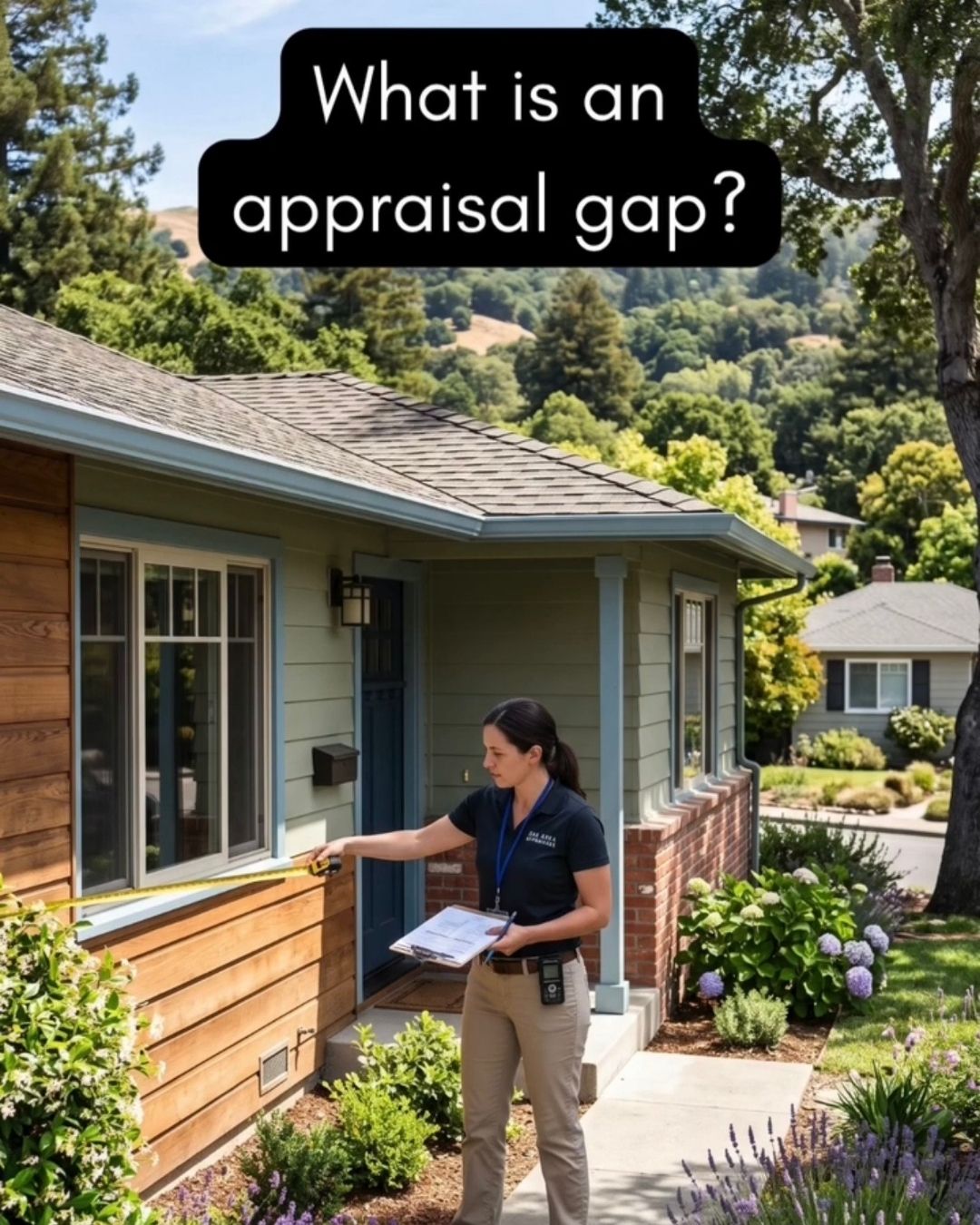
What actually is an appraisal gap?
An appraisal gap occurs when the agreed-upon purchase price of a home exceeds the lender's appraised value, which means the bank won’t finance the difference. In competitive markets like Willow Glen, where single-family homes in Santa Clara County sold at a 105% sale-to-list ratio with a median of just 8 days on the market as of February 2026 (MLSListings), appraisal gaps are quite common. Typically, buyers cover the gap with additional cash or negotiate with the seller to share or absorb the difference.
If you've made an offer above the asking price in Willow Glen this year—and let's be honest, that's the case for most offers right now—you need to grasp this concept before you find yourself in escrow with a number that doesn't align with what the bank is willing to lend. I’ve guided numerous buyers and sellers through the intricacies of appraisal gaps, and those who prepare in advance tend to rest a lot easier than those who do not.
What Exactly Is an Appraisal Gap?
Let’s break it down. Suppose you offer $1,650,000 for a Craftsman close to Lincoln Avenue, and the seller accepts. Your lender won’t simply provide that amount based on your agreement—they will send a licensed, independent appraiser to determine the actual worth of the home based on recent comparable sales. If the appraiser values the property at $1,600,000, you’ll have a $50,000 appraisal gap.
Lenders will base your loan amount on whichever figure is lower: the purchase price or the appraised value. So, in this case, if you're putting 20% down, your loan will be capped at that $1.6 million appraisal, not the $1.65 million you agreed to pay the seller. That $50,000 difference doesn't vanish; someone must cover it, or the deal will collapse.
Why Are Appraisal Gaps So Common in Willow Glen?
Appraisals lag the market by nature. An appraiser is required to use closed, recorded comparable sales — not what's currently in escrow, and definitely not what a house might sell for next month. In a market moving as fast as ours has been, with homes going under contract in single-digit days and buyers stretching to compete, the accepted offer price can outrun what the last three closed comps support on paper.
This is especially true for a neighborhood like Willow Glen, where inventory is tight, buyers want walkability to Lincoln Avenue, and the housing stock is a mix of updated Craftsmans, newer builds, and homes with real character that don't always have a clean comp down the street. That's part of why buyers keep asking is Willow Glen worth the price — two homes on the same block can appraise differently depending on square footage, lot size, permits, and finish level, and appraisers have to justify their number with paper, not vibes.
Who Covers the Gap?
There are essentially three scenarios that can unfold, and which one occurs is usually negotiated before you write the offer:
- The buyer pays the full gap in cash. This is the most common outcome in a competitive bidding situation. It’s also why an "appraisal gap coverage" clause—where you agree in writing to cover a specific dollar amount or percentage above the appraised value—has become a popular strategy to strengthen offers in multiple-offer circumstances.
- The seller and buyer share the difference. This is not guaranteed but is negotiable, especially if the seller wants a smooth closing and the buyer has some financial leeway but limited cash.
- The seller lowers the price to match the appraisal. Sellers aren’t obliged to do this, and in a hot market, they often don’t need to. However, it can happen, particularly if the buyer pool has diminished or if the appraisal comes in unexpectedly low.
If none of these options work, the buyer can opt to walk away—but only if the purchase contract includes an appraisal contingency. Waiving that contingency to make an offer more competitive represents one of the biggest risks I advise buyers about, as it means you will be responsible for covering the entire gap without a legal exit if the numbers don’t align.
How Can Buyers Protect Themselves Before Making an Offer?
Here are several strategies I recommend all my buyers consider before submitting an offer in this market:
- Know your actual cash cushion. Before falling for a house, determine how much extra cash you can contribute at closing if the appraisal comes in low, not just theoretically, but based on your actual bank balance.
- Obtain a realistic understanding of comparables, beyond the listing agent’s pricing narrative. I gather recent closed sales for every offer I draft, allowing my buyers to estimate where the appraisal is likely to fall before we commit to a number.
- Decide on your appraisal gap coverage ahead of time, rather than under pressure. Entering an offer with the knowledge that "I'll cover up to $40,000 over appraised value" is far less stressful than making that decision in a time crunch.
- Consult your lender about how much they will require in reserves if you must cover a gap—this can influence your overall approval, not just this particular transaction.
If you’re selling, understanding appraisal gaps allows you to assess offers accurately. An offer that's $80,000 over asking with no appraisal gap coverage and a full appraisal contingency can actually be weaker than an offer that's $40,000 over asking with $30,000 in guaranteed gap coverage. The headline figure isn’t the complete picture—I walk every seller through what each offer genuinely guarantees, not just what appears on page one.
What’s Happening in the Willow Glen Market Right Now?
Overall, Santa Clara County's single-family homes are still favoring sellers—1.8 months of inventory and that 105% sale-to-list ratio as of February 2026 (MLSListings) illustrate the trend. Willow Glen continues to attract strong demand due to its walkability, tree-lined streets, and proximity to Downtown San Jose, which indicates that appraisal gaps are likely to persist. If you’re preparing to buy or sell in this area, these are the kinds of details worth discussing before you enter negotiations.
About the Author: Michelle Elliott is a Realtor with Coldwell Banker Realty (DRE# 01777533) specializing in Willow Glen, Cambrian Park, Almaden, and Downtown San Jose, with 20+ years of experience and over $235M in lifetime sales volume. Ranked top 1.5% Nationwide [Real Trends], top 5% in Santa Clara County, she's been featured on KTVU Fox 2 and co-hosts "Say What You Want About Real Estate. [Full bio →]
No. Sometimes the appraiser's comps support the higher price, especially if recent comparable sales in the area have also closed above list. It only becomes a gap if the appraised value comes in below the agreed purchase price.
Yes. Your lender can submit a Reconsideration of Value with additional comps or corrected information, though appraisers aren't required to change their number, and it rarely works.
No. The appraisal gap is the dollar difference between price and value. The appraisal contingency is the contract clause that lets a buyer renegotiate or walk away if the appraisal comes in low — you can have a gap with or without a contingency in place.
Cash buyers can still order an appraisal if they want one for their own peace of mind, but since there's no lender requiring the value to match the price, a low appraisal doesn't kill the deal the way it can with financing.
It varies by price point and how competitive a specific listing is, but I typically walk buyers through scenarios in the $25,000–$75,000 range for well-priced Willow Glen homes drawing multiple offers. Every situation is different, which is why I run the numbers with each buyer individually.
Read the full transcript here
Full Transcript
Michelle Elliott | Coldwell Banker Realty | CalRE# 01777533 Top 1.5% Realtor Nationwide | 20+ Years in San Jose & Willow Glen
📲 Reach out to Michelle with any real estate questions or to discuss your next move.
Downtown San Jose
Almaden