Facebook
 X
X
 Pinterest
 Copy Link
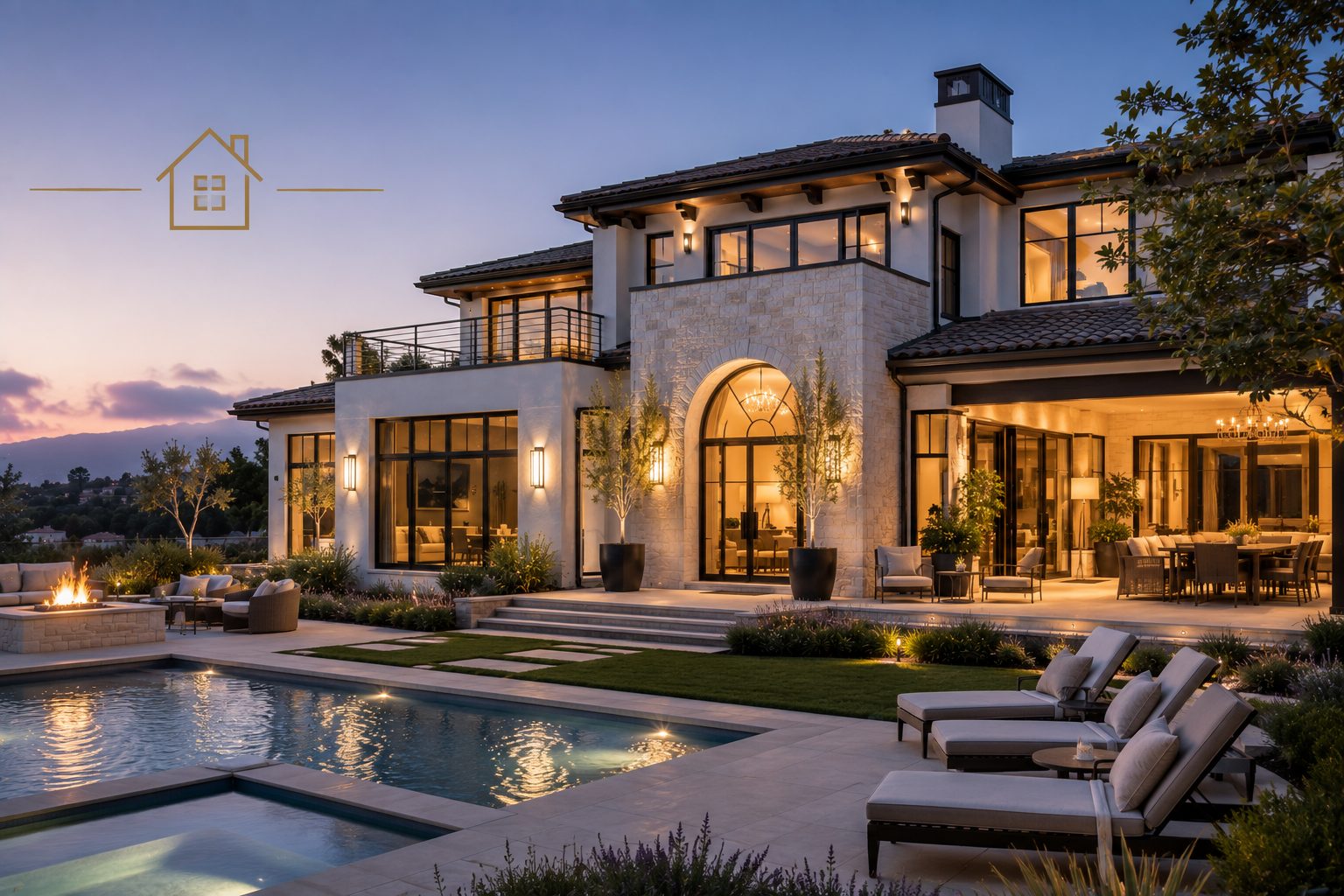
Selling a luxury home requires a different approach than marketing a typical property.
At the higher end of the market, presentation, positioning, pricing, and exposure all matter. Buyers have access to an enormous amount of information before they ever schedule a showing, which means your property needs to communicate its value from the moment it appears online.
The goal isn’t simply to make a luxury home look beautiful.
It’s to identify what makes the property distinctive, present those qualities accurately and compellingly, and create a marketing strategy designed to give the home meaningful exposure.
Here’s what I recommend luxury homeowners consider before going on the market.
Start With the Property’s First Impression
For many buyers, the first showing happens online.
Before they walk through the front door, they may have already studied the photos, watched the video, examined the floor plan, looked at the neighborhood, and compared the property with other homes on the market.
That’s why professional visual marketing can be especially important for a luxury listing.
Depending on the property, the marketing package might include:
- Professional architectural and interior photography
- Professional video
- Drone photography or video when appropriate and legally permitted
- Twilight photography
- Floor plans
- Detailed property descriptions
- Dedicated property marketing
- Social media and digital marketing
Not every home needs every marketing tool.
A hillside property with expansive views may benefit tremendously from aerial photography, while an architecturally significant home may require more emphasis on craftsmanship and interior details.
The marketing should be built around the property—not the other way around.
Tell the Story of the Home
Luxury real estate marketing shouldn’t read like an inventory sheet.
“Four bedrooms, three bathrooms and 3,200 square feet” tells buyers what exists.
It doesn’t explain why the property is special.
Maybe it’s an extensively restored historic residence with original architectural details.
Perhaps it’s a contemporary home designed around indoor-outdoor living.
It could have exceptional views, a thoughtfully designed garden, custom millwork, distinctive architecture, extensive renovations, or an unusual lot.
Those are the details that deserve attention.
A historic Rose Garden property, for example, shouldn’t necessarily be marketed the same way as a contemporary hillside residence in Almaden Valley.
The homes are different.
Their stories should be, too.
Prepare the Home Before You Market It
Beautiful photography can’t compensate for preparation that was overlooked.
Before scheduling photography, I recommend looking carefully at the entire property through a buyer’s eyes.
That may mean decluttering, deep cleaning, completing appropriate repairs, refreshing landscaping, adjusting furniture placement, improving lighting, or considering professional staging.
For some properties, staging can help demonstrate scale, room function, and furniture placement. For others, the owner’s existing furnishings may already complement the architecture beautifully.
The question isn’t:
“Does every luxury home need staging?”
It’s:
“What presentation strategy best showcases this particular home?”
That’s a much better place to start.
Market the Lifestyle Through Property Features
This is also an area where careful Fair Housing-compliant marketing matters.
Rather than trying to define the person who should buy the home, focus on what the property actually offers.
For example, marketing can highlight features such as:
- Indoor-outdoor entertaining areas
- Proximity to restaurants, shopping, recreation or transportation
- Architectural style and craftsmanship
- Views and outdoor spaces
- Home offices or flexible-use rooms
- Renovations and upgrades
- Lot size and landscaping
- Smart-home technology
- Garages, parking and storage
- Community amenities, when applicable
Let buyers decide whether those features fit their needs.
Marketing should not indicate a preference, limitation, or exclusion based on characteristics protected under applicable federal, California, or local Fair Housing laws.
Describe the home—not the person you imagine living in it.
Exposure Should Go Beyond the MLS
The MLS is important, but it shouldn’t necessarily be the entire marketing plan for a luxury property.
Depending on the home and market, a comprehensive campaign may incorporate professional digital marketing, social media, luxury real estate networks, agent-to-agent outreach, relocation channels, print marketing, brokerage resources, and other appropriate exposure.
Networking can also matter at the luxury level.
Agents may be working with buyers whose needs aren’t obvious from online activity alone, so communicating a new listing effectively within the real estate community can be another important part of the launch.
The objective isn’t simply to generate the largest possible number of clicks.
It’s to give the property strong, appropriate exposure while presenting it consistently across every marketing channel.
Pricing Is Part of the Marketing
A spectacular video won’t fix a pricing problem.
Before establishing a list price, I look at more than a simple price-per-square-foot calculation.
Luxury homes often have characteristics that make direct comparisons difficult.
Architecture, renovations, lot characteristics, views, location, privacy, condition, amenities and even the quality of the outdoor environment can affect how competing properties compare.
That’s why pricing a luxury property requires careful analysis of recent sales, current competition, market conditions and the home’s individual characteristics.
Pricing significantly above what the available market evidence supports simply to “leave room for negotiation” can carry risks.
At the same time, every property and market are different.
There isn’t one pricing strategy that’s right for every luxury home.
Details Matter
At this price point, small inconsistencies can become noticeable.
Before launching the listing, walk through the property carefully.
Do all the lights work?
Are the windows clean?
Is the landscaping ready for photography?
Are there minor repairs that should be completed?
Do outdoor spaces look as polished as the interiors?
Are permits, renovations and significant property features accurately represented?
Is the information appearing online consistent with the property records and seller disclosures?
A luxury marketing campaign should be visually impressive, but it also needs to be accurate.
Don’t Forget the Showing Experience
Online marketing gets someone interested.
The property itself has to take over from there.
The showing experience should reinforce what buyers saw in the marketing.
That can mean thoughtful lighting, comfortable temperature, tidy outdoor spaces, clear access throughout the property, and enough time for buyers and their representatives to properly evaluate the home.
There’s no need to manufacture an artificial “luxury experience.”
The property should be the star.
Luxury Marketing Isn’t One-Size-Fits-All
This may be the most important point.
A luxury listing isn’t automatically a luxury marketing campaign simply because it has professional photos and a high list price.
The strategy should reflect the individual property.
A historic Willow Glen residence may call for architectural storytelling and neighborhood-focused photography.
A hillside Almaden property might require aerial imagery and an emphasis on the home’s setting, views and outdoor spaces.
A contemporary residence may benefit from clean architectural photography and video that demonstrates the home’s design and flow.
Different properties deserve different campaigns.
A Fair Housing-Compliant Marketing Strategy
Luxury marketing still operates under Fair Housing laws.
Marketing should focus on the home and its objective characteristics rather than expressing preferences about who should purchase it.
That means avoiding language suggesting that a property is intended for—or especially suitable for—people based on protected characteristics.
Instead, describe what’s actually there:
Not: who belongs in the home.
But: what the home offers.
That’s both a better Fair Housing approach and, in my opinion, better real estate marketing.
The Bottom Line
Luxury homes deserve more than a standard marketing template.
The strongest strategy starts by understanding what makes the property distinctive and then building the photography, video, presentation, pricing, messaging and exposure around those qualities.
Not every luxury property needs the same photography package.
Not every home needs staging.
Not every property should follow the same pricing strategy.
And no marketing plan can guarantee a particular price, number of offers or time on market.
What sellers can control is how thoughtfully the property is prepared, positioned and presented when it enters the market.
Thinking About Selling a Luxury Home in San Jose?
If you’re considering selling a luxury property in San Jose, Willow Glen, Almaden Valley, Rose Garden, Cambrian, or elsewhere in Silicon Valley, the first step should be understanding how your particular property fits into today’s market.
I’d be happy to walk through your home, evaluate its positioning and discuss a customized marketing plan built around the property’s individual strengths.
Before we decide on photography, staging, pricing or advertising, we’ll answer the most important question:
What makes this home different—and how do we communicate that clearly to the market?
From there, we can build the strategy.
This article is for general real estate information only. Marketing, staging, pricing, advertising, and other strategies do not guarantee a particular sale price, number of offers, or time on market. Real estate advertising and services should comply with applicable federal, state, and local Fair Housing laws.
GET YOUR FREE HOME SELLING BOOK
About the Author – Michelle Elliott
With over 20 years of experience navigating the fast-paced Silicon Valley market, I provide a strategic, results-driven approach to residential real estate. My career is built on a foundation of deep local expertise and a relentless commitment to my clients’ success, resulting in over $235 million in lifetime sales volume and a consistent ranking in the top 3% of agents in Santa Clara County and top 2% at Coldwell Banker. My expertise has been featured on KTVU Fox 2, Real Producers and the Willow Glen Resident. She is also the co-host of the San Jose Podcast “Say What You Want About Real Estate”
A Hyper-Local Expert with Global Reach
I specialize in San Jose, in the neighborhoods of Willow Glen (95125 & 95124) Cambrian Park and Almaden, Downtown San Jose/Japantown (95112) markets. As a certified Luxury Property Specialist with Coldwell Banker Realty, I combine high-end marketing strategies with granular neighborhood knowledge to help my clients achieve premium results.
The “Tiger” at the Negotiating Table
My clients have characterized me as a “tiger” at the negotiating table who remains “sweet and patient” with my clients throughout the process. I pride myself on being a fierce advocate for my buyers and sellers, ensuring the best possible terms in every transaction, and I strive to be the best Realtor in 95125! This balance, drive, and tenacity have earned me consistent 5-star ratings across Google, Zillow, Realtor.com, and Yelp.
Michelle Elliott
Michelle@michelleelliottrealtor.com
1712 Meridian Ave, Ste C, San Jose, CA
DRE 01777533